Tree Sap on Your Vehicle: Why Fast, Safe Removal Matters
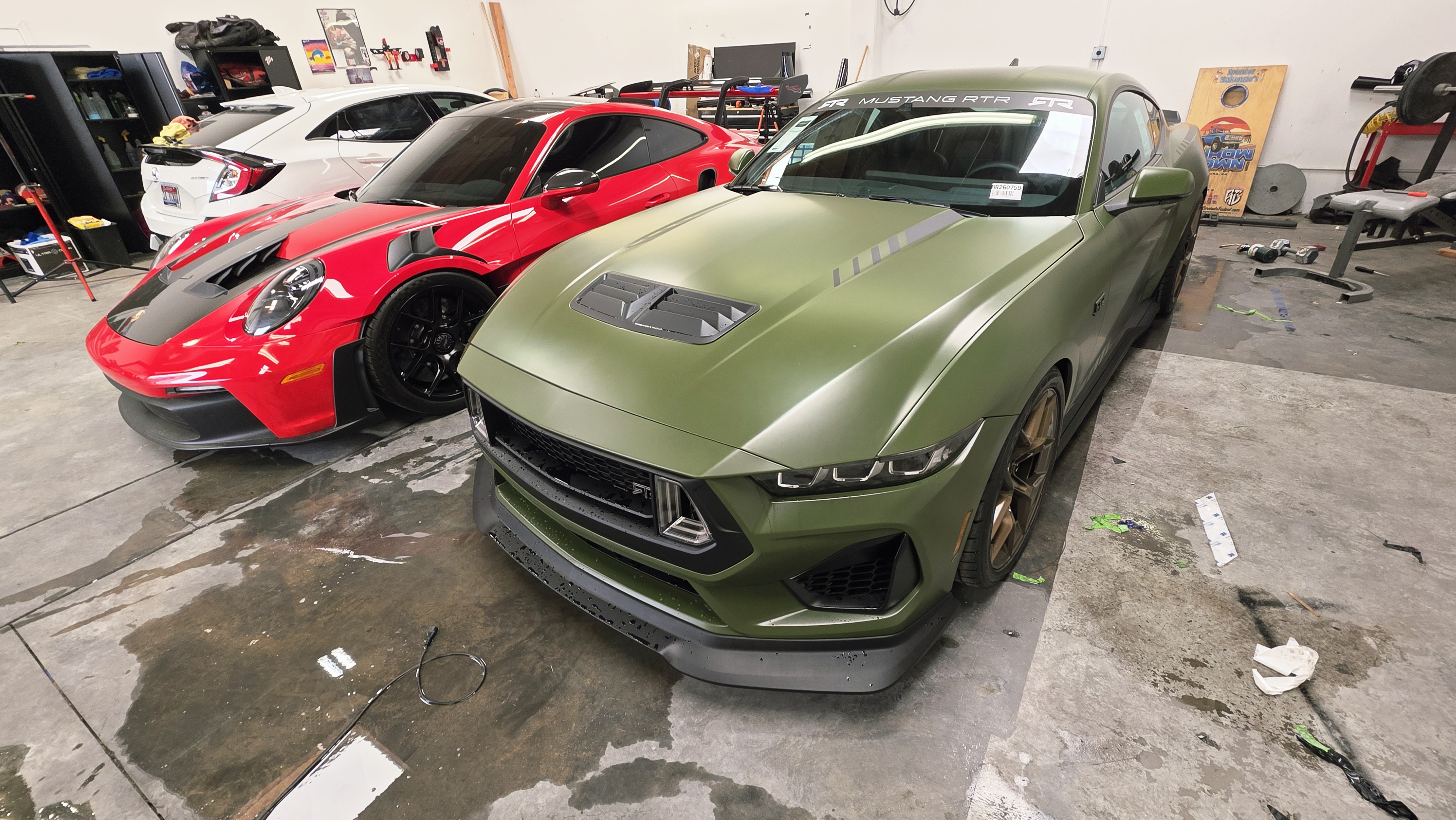
Tree sap on your vehicle: What fast, safe Removal Matters
Parking under a tree may help keep your vehicle cool, but it can also leave behind one of the most stubborn contaminants your paint will encounter, tree sap.
Tree sap may begin as a small, sticky spot, but it should never be ignored. As it dries and hardens, especially under the Southern California sun, it can bond tightly to the surface and become increasingly difficult to remove safely. Left untreated, sap may stain, discolor, or etch the clear coat, creating a visible mark even after the sap itself has been removed.
Why tree sap can damage automotive paint -
Your vehicle’s clear coat protects the color beneath it, but it is not indestructible. Tree sap contains natural sugars, resins, and organic compounds that can stick aggressively to paint, glass, trim, vinyl, paint protection film, and other exterior surfaces.
Heat makes the problem worse. When a vehicle sits in direct sunlight, repeated heating and cooling cycles can cause the sap to harden and grip the surface more firmly. Dirt and road debris may also become trapped in the sap, creating another opportunity to scratch the paint if the area is wiped aggressively.
The longer tree sap remains on the vehicle, the greater the possibility of:
• Clear-coat staining or discoloration
• Etching or a permanent outline in the finish
• Scratches caused by improper removal
• Damage to waxes, sealants, or ceramic coatings
• Staining or distortion on vinyl wrap and paint protection film
• Reduced gloss and clarity in the affected area
Quick removal gives you the best chance of eliminating the contamination before permanent correction becomes necessary.
How to safely remove tree sap
Always work on a cool surface in the shade. Never attempt sap removal when the paint is hot.
1. Wash the Affected Area
Begin with a proper automotive wash to remove loose dirt and debris surrounding the sap. This reduces the chance of dragging abrasive particles across the paint.
2. Soften the Sap
Place a warm, damp microfiber towel over the affected spot for several minutes. Usually this is not an effective technique because the sap is probably on most of the flat surfaces of the car. If hot water is an option then utilize it as least aggressive solution is best to start with and work way up. The hot water will soften the saf making easier to remove.
3. Use an Automotive-Safe Sap Remover
Apply a dedicated automotive tar-and-sap remover to a clean microfiber towel according to the product’s directions. Hold the towel against the sap briefly, allowing the product time to work. I like using Stoner sap and tar remover. I like to spray to the towel and apply to approximately 3x3 area and allow to soak. Then with light pressure using a microfiber towel and in a linear motion go back and forth and evaluate the effectiveness.
Gently wipe the area. Do not scrub aggressively. Several controlled applications are safer than trying to force the sap off in one pass.
4. Repeat as Needed
Older or thicker sap may require more than one treatment. Use fresh sections of the microfiber towel so removed contamination is not rubbed back across the paint.
5. Wash and Inspect the Surface
After the sap has been removed, wash or thoroughly clean the treated area to remove any remaining chemical residue. Inspect the surface under good lighting.
If a shadow, ring, cloudy patch, or dull spot remains, the sap may have affected the clear coat. Additional polishing or paint correction may be needed.
6. Restore the Protection
Sap-removal products may weaken or remove waxes and sealants in the treated area. Reapply the appropriate protection after cleaning. Vehicles protected with a ceramic or graphene coating should be inspected to determine whether the coating has been affected.
What not to use on your vehicle
Some household products may remove sap, but they can also stain, scratch, haze, soften, or strip automotive surfaces.
Avoid using:
• Razor blades on painted surfaces
• Magic Erasers or abrasive household sponges
• Acetone or nail-polish remover
• Lacquer thinner or harsh solvents
• Gasoline
• Aggressive scraping
• Heavy pressure with a dry towel
• Very hot water on the vehicle
Isopropyl alcohol is sometimes used during professional detailing, but its strength, dwell time, and surface compatibility matter. Improper use can weaken existing protection or affect sensitive finishes. Always test any product in an inconspicuous area first.
Special care for ppf, vinyl, and matte finishes
Paint protection film, vinyl wrap, matte paint, and satin finishes require a different level of care. A chemical that is acceptable on factory clear coat may stain, discolor, or change the appearance of these materials.
Avoid polishing matte or satin surfaces because polishing can create a permanently glossy spot. If sap is on vinyl or PPF or near an exposed film edge, consult a professional before using strong solvents or applying heat.
What if the sap has already etched the paint?
If the sap is gone but an outline remains, continuing to apply solvent usually will not solve the problem. The remaining defect may be below the surface and require professional polishing or paint correction.
A professional inspection can determine whether the mark can be safely improved and how much correction the paint can tolerate. Severe damage may not be completely removable without more advanced repair.
Preventing Future Tree-Sap Damage
The best defense is early removal and proper protection.
• Avoid parking beneath sap-producing trees when possible.
• Inspect your paint regularly, especially during warm weather.
• Remove fresh contamination promptly.
• Maintain a quality wax, sealant, ceramic, or graphene coating.
• Consider paint protection film for high-exposure areas.
• Never allow someone to scrape hardened sap from the paint.
Protective products cannot make a vehicle completely immune to tree sap, but they can create a sacrificial barrier and make routine cleaning easier.
Professional Tree-Sap Removal in Redlands, California
If tree sap has hardened, spread across multiple panels, or left visible marks behind, Titan AutoWorks can safely evaluate the condition of your vehicle.
We provide professional decontamination, paint enhancement, paint correction, graphene and ceramic coatings, and paint protection film for vehicle owners throughout Redlands and Southern California for over 20 years!
Removing the sap is only part of the job. The goal is to eliminate the contamination while preserving as much of the original finish as possible.
Titan AutoWorks
528 Amigos Drive
Redlands, CA 92373
Call or text: 909-368-0202
Instagram: @titanautoworks_redlands
Protection • Perfection • Preservation


Comments